Latest Post

Genuine Reasons Why Enterprises Holds Open Source

OpenSource Development
Bernard Golden, a CIO.com columnist, attends some of the conferences. After attending conferences, he comes away with both an understanding of Enterprise IT’s assurance to open source and some realistic advice for people, who are considering open source enterprise solutions.

He just finished attending two main conferences – the Cloud Foundry Summit and the OpenStack Summit. When it comes to talking about both the conferences, both were hives of activity with presence well up on the earlier event.

According to him, the most outstanding thing to him was the huge presence of large enterprise IT decision makers – directors of applications, architects and operations. Enterprise IT has big and growing commitment to open source products in partiality to proprietary alternatives.

The Advantages of Open Source:

Well, it is the most interesting and welcomes development as lots of enterprises appreciate the benefits of open source-licensed products:

Wonderful Innovative: 

Open source development is known for replicating Bill Joy’s law: It doesn’t matter who you are, there are lots of smartest people, who are working for someone else. For all the software vendors, it is true, so making use of a product with a potentially bigger developer base allows users to get complete access to greater innovation. There is another way as well – by enabling anyone to contribute code, it allows an open source product to incorporate unusual use cases that a proprietary vendor would either ignore or dismiss.

Greater Transparency:

Not only the source code is obtainable as all of the design discussions, etc are obtainable in the open, in contrast to the enigmatic processes of proprietary vendors. However, it is extremely easy yet effective to assess the product and its community and decide if using the product is a good decision or not.

Huge Ability to Influence Product Direction:

Mainly, it is a formula of the software industry. People, who are spending their gold, get to guide the boat. It is better to hope your product objectives align with the vendor or its large users if you are a small customer of an important proprietary software vendor.

A Right Fit for Containers

For third platform applications, open source licensing models are a much better fit. When it comes to their intrinsic load variability, it means that new examples/containers are being initiated and stopped all the time.

It shows huge challenges to proprietary code products as they are licensed on a perpetual basis per example/container. In any case, if the application has extremely high use more than 10% of its lifespan, which means purchasing different licenses, which are rarely used. For static applications, proprietary licenses are a right choice with steady use profiles. By difference, open source licenses are a right choice for the Third Platform world.

With no per-server/container cost, applications can be designed to support high load variability with no cost constraints. A lot of people believe that Third Platform applications come to show the majority of applications that mean open source will come to control new apps.

Believing That Open Source for Your Enterprise

Open source is the main feature of enterprise IT going forward – below, you can find some of the important things to keep in mind:

Recognize Your Key Open Source Components – 

Some of the components will represent critical dependencies as open source will be spread across your applications. All are those, who you need to be particular about their maturity, community size and robustness and openness to code contributors and feature suggestions.

Develop Open Source Skills – 

Being a completely involved in open source is more than downloading and installing a software component for an application. It is important to comprehend the development pace likely sparseness of documentation. You will require such staff members, who are more eager to be engaged with a product and its community.

Make a Decision What to Add & What to Keep Internal – 

It is essential for you to make a decision for any code you write as where to place it. If you have decided to add it to your product, your code will become an integral part of the product and be there in future releases. You also expect to keep it regular that means a constant commitment that is far less than the work you will take on if you do not add your code that needs re-integration with every release.

Stay connected with us to get more information on open source and its solutions as we keep updating top huge information on open source. Moreover, you can also get support from professional open source developers regarding any of your queries related to your project!
 

Apple vs. Open Source – The War That Was Not Actually War

You know that open-source developers are completely comfortable with Apple, dazzling good taste and higher priorities. Well, open source used to be doctrine in so far as development. However, those days are gone.


In reality, the term open source advises a more comfortable view on software sharing, having moved its GPL-wielding free software. While a free sourceror will not be caught lifeless using anything other than GNU Linux, open sourcerors are happy to make use of whatever works.

Open Source Runs Apple –

However, open-source contributors wait less probable to make use of Apple products than others. Approximately 75% of the open source contributors are happily make use of at least one Apple product as per the Eldarion’s survey.
  • 65% of open-source contributors are making use of OS X as their main OS system with 22% use Linux and 8% Microsoft Windows.
  • Approximately three out of four open-source contributors are making use at least some Apple products.
  • One of the main reasons given by open-source contributors for selecting Apple was “I like the ecosystem” followed by "reliability" (30%), "better than Microsoft (21%), and "other" (16%).
  • More than one in two (57%) open source contributors surveyed make use of the iPhone while 38% use an Android phone.
  • The main reason given was “because Apple is the contrast of open source” for the minority of open source contributors, who are avoiding Apple. Followed by it’s overpriced and not worth the money” 31%, “it’s so cool it’s uncool” (13%), and “other” (6%).
The main part of this comes down to the 132 people, who have answered Eldarion’s survey. When it comes to talking about Eldarion, it is a web development company, which mainly focuses on Django development.

The developers in its instant globe of power are going to be web-focused; therefore less likely to be the core communications gear starts, which live and die Linux or other open-source communications.

The More Things Change –
I noted "The ironic rise of the Mac among open source developers." While I offered a number of reasons, two stand out to me now. Initially, Mac OS X is UNIX, and it is a comfortable system for many open sourcerors to use. However, OS X covers UNIX behind a wonderful UI, Apple makes it extremely easy to get a command line so that developers can make use of just works when they want.

This is the second reason why Apple has been so big with open-source developers:
All the developers, who wanted to spend their time on building, say, a new compiler, don’t necessarily want to have to spend equal amount of time developing related infrastructure.

ActiveState software executive Bernard Golden, talked about enterprise adoption of open source, disputes that only some software would make intellect for deep vow.

"While open source will be spread throughout your applications, certain components will represent critical dependencies. Those are ones you need to be certain about regarding their maturity, community size and robustness, and openness to code contributions and feature suggestions. For those components that represent dependencies, understand that you are, in effect, getting married."

In short, some serious projects, contribution matters. It makes sense to help out steer it through contributions if you are depending on an open-source project. Possibly it is not worth getting religious about it. All this is an extremely long way of stating: open source developers are people.

They have very least time and attention, and they select Apple products even though as they don’t necessarily support their bigger interest in contributing to open source.


Stay connected with us to get more information on open source and its related solutions as we keep updating top information about open source. Moreover, you can also hire open source developer for your project!
 

10 Best and Popular Content Management Systems to Check Out

Content Management System
When it comes to choosing a content management system, there are many alternatives to choose from. So, check out some of the best collection of 10 best CMS options. Here we have listed some familiar CMS like WordPress and also others that might be new for you. Explore and decide which is better for you to adopt for your business.

WordPress

WordPress is the most popular and state-of-the-art publishing platforms that focus on usability, aesthetics, and web standards. It comes with a quick installation feature, which is considered as the strength of this platform.

Interestingly, WordPress has the massive user and developer community due to which it has a collection of enhancements and plug-ins to extend platform’s functionality.

Textpattern

One of the mostly adopted, Textpattern is better known for its simplicity elegance. Textpattern isn't a CMS, however, it comes with svelte and minimal code base. Textpattern delivers the best content management system that developed standards-compliant and well-structured pages.

Textile markup in the textareas is used by Textpattern rather than providing a WYSIWYG editor for creating HTML elements within the pages. Textpattern has an active developer community that provides help and resources at their Textpattern.org site.

Contao

Incorporated with Ajax and other Web 2.0 features, Contao comes with a collection of features like rolling back to prior versions of content, editing multiple records and so on. Different types of common built-in modules are added in Contao. Users can also find some premium as well as free theme for Contao.

SilverStripe

An open source CMS, SilverStripe is best suited for designers and developers, who know how to code well. It has a recipes and tutorials for beginning developers and different modules for forums, blogs and forms. Designers can use HTML or CSS, whichever they preferable.

SilverStripe comes with a powerful content authoring tools that permit to set up their own content and can be published/unpublished content on particular date. Users can find a robust development community for instant help.

Joomla!

Joomla! is blessed with everything that you are looking for developing your website. From inventory control systems to reservation systems, complex business directories, etc., you will find every prominent feature in Joomla! Users don’t need any custom coding for extending Joomla!’s functionality as there are many plugins and add-ons for Joomla! are available.

DotNetNuke

Written in PHP, DotNetNuke is a rare exception, which is written in Microsoft’s ASP .Net and suited to Windows servers, and this consideration. Thus, this is one of the best reasons why people choose for DotNetNuke.

Unlike many solutions, DotNetNuke is not an open source solution, however, you can use a demo site and trial. 


Drupal

Drupal is one of the most popular content management systems for developing best websites. Drupal can be scaled for developing personal blogs or enterprise website. 

Additionally, it has many different modules for adding/increasing functionality.

Concrete5

Concrete5 enables to develop and manage different website without using much time and money. Concrete5 is an ultimate time saving solution for developer, designers and site owners due to its easy-to-use feature and best looks.

RefineryCMS

RefineryCMS is based in Ruby on Rails framework that features a collection of different engines like image gallery, blogs, membership, search, etc. It comes with same conventions that made a platform success by adopting concentrate on the end users when developing the user interface and delivering a simple hook for adding new functions and redesigns both the admin screens and the front end.

Umbraco

Umbraco is another best open source ASP.Net solution that available with optional paid-for services like support and training. Umbraco is popular among some best brands as it enables to make things simpler for the web publishers with open source licensing.

Above listed are 10 best CMS to look after. If you are thinking to adopt one of the content management systems for your business, then contact Perception System for better solution through our CMS experts.
 

Open Source CMS – What’s New in This June That You Should Know?

Whenever it comes to talking about open source content management systems, we can’t carry out our talk without talking about WordPress, the most demanding and popular CMS on the earth.

WordPress is one such CMS that has powered a lot of biggest websites in the world like Time magazine, Ted and CNN. Today, WordPress has powered more than 23% of the top 10 million websites in the world, according to W3tech.

However, being big and popular doesn’t mean that it is without problems – and all is not copacetic in WordPress-land, said Nimrod Luria, a CTO of Sentrix. Thousands of WordPress sites are being attached every year because of the huge popularity of this platform.

Extremely Simple to Exploit –

“There are approximately 30,000 plus plugins and 2,000 plus themes listed on the WordPress.org site. As we observed in 2014, some of the most well-known, widespread attacks took advantage of third party plugins. Many plugins are sensitive to cross-site scripting (XSS), SQL injection and other attacks. The fact that WordPress is run on PHP, one of the most popular open source development languages, makes it easy for attackers to exploit bug-riddled PHP code, along with theme and plugin files," said Nimrod Luria.

He also observed that the WordPress community has a lot of contributing developers, who are constantly expanding this platform along with its themes and plugins.
Even WordPress administrators are also informed about the plugin version updates on their dashboards; however, not all are following the best practice of keeping their platforms up to date.

Moreover, WordPress websites, which are hosted on a shared environment, the hosting service providers are not giving guarantee about timely patching, often leaving website owners exposed to attacks.

What to Do?

For hosting a WordPress-based website, numerous options are there from on-premises all the way to fully managed platforms like WPengine. When evaluating WordPress hosting solutions, the main reflection is security along with the flexibility and ease of management.

He said, “With on-premises and other simple hosting solutions such as VPS or 'dedicated,' as the site owner, it is your responsibility to secure and update your site, and ensure performance and availability.” He also added, “However, you also need to consider that hosting your website with a third party hosting company does not guarantee security. Due to the shared environment, if any site on a server is hacked, other sites on the same server may also be compromised."

Admin Access and Authentication –

On WordPress websites, brute-forcing account credentials are the extremely common attack. Some of the other ways that passwords can be compromised like sniffing credentials over an HTTP login session or even recovering them directly from WordPress administrator workstations.

Moreover, plugin authentication failures may also enable attackers to increase administrative rights and perform AJAX functions, which are specially designed to be used by website operators. He added, “Obviously, gaining admin or server management account access provides attackers with complete access to affiliated WordPress instances.”

Uploaded User Content –

WordPress is one such CMS that allows its users to upload their own content as writers or editors. Luria explained, “This security risk could result in untrusted users uploading HTML or JS files in order to launch attacks, such as XSS, against users that will visit that site. By executing an XSS attack a hacker can silently gain control of user credentials.”

With WordPress platform, you can also share your own experience and other open source CMS platforms in the comments below. Now, let’s have an instant look at what’s new in open source CMS world in the month of June:

Composite C1: 

A team of the Composite C1 has established the Mercury starter website, a modern and animated mobile-first website. In addition to this, it also comes with a portfolio, contents search, a form builder, employee profile page and a lot more. It is built on:
  • For page templates, ASP.NET Razor using Razor Web Pages.
  • Bootstrap is also a leading front-end framework that used for developing responsive and mobile-first web projects.
  • LESS, an extension to the CSS language, supporting mix-ins, variables, functions and a lot of other tactics in your stylesheets.
When it comes to talking about the Mercury starter website, it comes with numerous pre-installed add-ons and supports theming. Users can also directly modify its appearance. 

Moreover, users are capable enough to personalize the website by changing its colors, adding their own logo, updating links in the page footer, additional projects with pictures and videos to their portfolio and more.

Hippo: 

Hippo is well-known for bursting some bubbly at its headquarters. And till now no one has talked about what’s next on the agenda. But the release of Hippo CMS 10 and debut of its Content Performance Platform have been important milestones. Moreover, you can also find Hippo CMS 10 release notes and a viewpoint on the game changing nature of this new release from the partners, AuthX.

You can find Hippo CMS 10 release notes here and a perspective on the game changing nature of this most recent release from our partners, AuthX, here. Well, the team of Hippo calls CMS 10 as the “most groundbreaking release to date.” The CMS has adopted principles from marketing automation, redefining the WCMS as intelligent marketing technology software that mainly used to optimize and personalize the customer journey.

Joomla:

When it comes to talking about Joomla Bug Squad, the CMS has a new Bug Squad Co-Leader, Tobias Zulauf.

A trainee specialist for system integration in Germany ‘Zulauf’ has been involved with Joomla since 2011. After that, he became an active Joomla Bug Squad member and code contributor.

He is also active in the German part of Joomla Land and moderator in the German forum and a member of the team of Joomla Bugs DE Project.

A team that is working within the Production Working Groups ‘The JBS’ is responsible for recognizing and fixing bugs within Joomla.
  • Reports bugs on New Issue Tracker
  • Fixing noted bugs and resolving reported problems as per the Bug Tracking Process.
  • For reported problems, scans the Joomla CMS 3.x Bug Reporting Forum and helps community members solve these problems.
However, the Bug Squad is also helpful with testing and quality assurance during a new important version is developed. When a version switched from beta-stage to the stable-stage, the bug-squad is in the lead within the development cycle of Joomla.

SilverStripe: 

Users will get a new major release to the SilverStripe Blog module with enhanced categorization, spam protection and management and permissions. Moreover, the SilverStripe Lessons section is expanding and the documents and video tutorials are onboarding new community members.


Stay connected with to get more information on the open source solutions and CMS solutions. Moreover, you can also hire our open source developer to get an instant solution or any of your queries related to open source project!
 

Open Source – A Right Choice For CMS Development

Open Source
In the year 1996, there were no proprietary content management systems, and Microsoft was still releasing the notion of the web as a possible platform for business or eCommerce activity.

In any case, if a website required any kind of functionality, unless one could find anything at Matt’s Script Archive to achieve the task. Slowly, the time passed and most of the people continued to make use of the open source solution.

Opt-in emails list managers, slide shows, employment opportunity listings, shopping carts, content editors, contact forms and many more all are built as open source using PHP. After some time, the content management systems emerged in the market, containing a package – there are lots of functional elements that relied upon our own resources to develop.

WordPress, Drupal and Joomla are coming out as the default new development platforms for various digital agencies, which had followed the same path. Then, some platforms came such as Magento and Concrete5 that began with a view to finally change into enterprise solutions with a price tag designed to get profit motives.

However, the earlier efforts of their foundational community editions were fueled by the passion of development communities, who helped in generating the main functionality. Along with these, a lot of $5, $50 and $100 plugins and extensions came-up to add custom functionality to meet client’s requirements.

Individual developers can make changes to meet more demanding client requirements because the open source model extended to plugins and extensions.

And all of this was designed to run on license-fee-free Linux, Apache, MySQL, and PHP operating systems running on low-overhead hardware. The main thread was that all of these were - still are – tools that are generated by people with a common purpose.

That major reason was the idea to help out the Internet achieve its importance by offering businesses, organizations and individuals with incredibly robust, but affordable web presence.

During this time period, a lot of software companies made use of investment money to develop expensive proprietary content management and eCommerce systems that designed to run on operating systems and databases with huge licensing fees.

It gives the opportunity for huge amount of money to change hands for the mega-corporations with wide budget, which used to spend thousands of dollars on everything they do. It is all right because it is your business model.

For smaller digital agencies, it is mush difficult to begin with web development project looking a lot of dollars pass through from the client to the software companies to develop the development platform.

It takes huge amount of money, which could have been used to develop more functionality for inbound marketing and other improvements. Furthermore, the solution has also delivered huge flexibility and customization possibilities to deliver the client with user experience and back end functionality to the particular requirements and business model.

There are lots of closed source proprietary systems that are doing only opposite, pressurizing the business to accept the rules and functionality. The open source model is the right choice for businesses as smart digital agencies are aware that if delivering value, total customization and return on investment are important components to their brand and value proposition.


Stay connected with us to get more information on open source and its solutions as here we keep updating important information that you must know. In any case, if you are facing in problem while executing open source solution, you can hire our expert open source developer, who has hands-on experience.
 

A Complete Step-by-Step Guide For Creating a Moodle Theme

Moodle Theme Development
Today, Moodle is a widely used free-source eLearning application that is also well-known as Course Management System, Learning Management and Virtual Learning Environment.

This high-end platform can be termed as education software on which you can easily expand educational application without any hassle. Moreover, Moodle can be used for alloyed learning, flipped classroom, distance education and other e-Learning projects in schools, workplaces, universities and other sectors.

If you already use Moodle for your project of school, university, institute and other eLearning sectors, you may want to give the best look to your website that is possible with theme.

Developing an effective and eye-catching Moodle theme becomes a lot easier with us as here we have given a complete step-by-step guide for developing a Moodle Theme. In this blog, you can find information on how to develop a theme for Moodle 2.0 and Moodle 2.1.

Theme Designer Mode -

Moodle is one such platform that does a lot of things in terms of performance under normal operation. One of these is to merge all the CSS into one file, minimize it, cache it on the service and then serve it. The cached version is served to mainly enhance page performance after the first request.

After making some of the changes, you are not able to see them immediately. However, you need to tell Moodle platform to rebuild the cache, which is serving. For designing themes, this was not practical, so the theme designer mode was added. This mode tells Moodle not to mix or cache the CSS when enabled as it gets delivered.

Get Started -

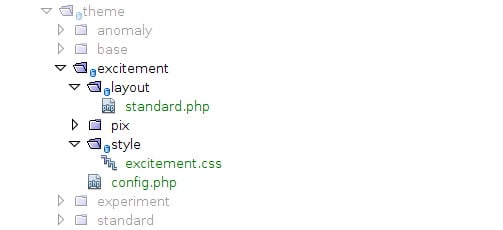
Initially, you have to do is to develop the directories and files that you will be using. You have to create the real directory for your theme. It is necessary that it must be the name of your theme and it is excitement. Within the theme directory of Moodle, the directory must be located. After that, in that directory, you can develop lots of files that you will require.

Below, you can find files that we wanted to create:

config.php
All of our settings will go here.

/style/
This directory will contain all of our stylesheets.

/style/excitement.css 
All of our css will go in here.

/pix/
Into this directory we'll put a screen shot of our theme as well as our favicon and any images we use in CSS.

/layout/
Our layout files will end up in this directory.

/layout/standard.php 
This will be our one basic layout file.

/lang/en/
The file we put here will make our theme name show properly on the Theme Selector page. You need a few standard entries. Copy the one from the Standard theme and modify is easiest.

You also need to have a directory structure that is similar to what is shown below after this setup step:


Configuring our theme

You need to open config.php in your favorite editor and have to start by adding the opening PHP tags<?php. Now, adding the settings:

$THEME->name = 'excitement';

It is extremely simple to tell Moodle the name of your theme, and if you ever have few config.php files open, it will be helpful for you to recognize that which one is best.

Afterwards, the parents for this theme:

$THEME->parents = array('base');

It informs Moodle that my new theme “excitement” wanted to extend the base theme. A single has the capability to extend any number of themes. Instead of developing a fully new theme and copying all of the CSS, you just have to develop a new theme, widen the theme you like and add the changes that you are looking to add in your themes.

However, the main aim of the base theme as it delivers us with a basic layout and enough CSS to make everything simple. Let's inform Moodle about our style sheets:

$THEME->sheets = array('excitement');

The final thing that need to add into theme's config.php file is the definition of the layouts for our theme.

Configuring The Language File

Open theme_base.php file from base/lang/en/theme_base.php
Save it as excitement/lang/en/theme_excitement.php
Change
$string['pluginname'] = 'Base';
to
$string['pluginname'] = 'Excitement';
Now, the new theme name must be showed properly in the Theme Selector:Site Administration > Appearance > Themes > Theme Selector
You are also capable of editing the theme description.
$string['choosereadme'] = 'Write your theme description here.';
In place, you should leave the following two lines in order to avoid notices while editing blocks etc.:
$string['region-side-post'] = 'Right';
$string['region-side-pre'] = 'Left';
Writing The Layout File

However, the excitement theme just has one layout file. The drawback of it is that you have to make the layout file that foes everything while the upside is that you only have to maintain one file.
Apart from the maintenance, making use of multiple layout files deliver a lot of advantages to actual world themes in which you can simply tweak and customize particular layouts in order to achieve the goals of the organization with the help of theme.
It is also good to comprehend the two most important objects, which will be used in your layout files: $OUTPUT and $PAGE before learning more.
Adding Some CMS
Both complete the theme is now usable and starting to look like a real theme with config.php and standard.php. However, if you change it using the theme selector, you can notice that it still lacks any style. While writing code, Moodle developers pleased to not use inline styles anywhere. It is a great as themers because there is nothing in Moodle, which cannot be styled using CSS.
Moodle CSS Basics

When it comes to talking about the Moodle 2.0, all the CSS for the complete Moodle is delivered. It was done due to performance reasons. Now, Moodle is reading all of the CSS, mixing it into one file, shrinking it removing any white space, caches it and delivers it.

Begin to Write Excitement.css

For the theme, it is not all of the CSS, but it is adequate to style the front page when the user is not logged in. You also need to remember that this theme expands the base theme, so there is already CSS for layout.

Making Use of Images within CSS

Now, its time for adding image files to the pix directory of the theme. It is must to add the background image for theme and header and headings also.

Adding a Screenshot and Favicon

However, the main thing that needs to add both a screenshot for this theme and a favicon for it. In the theme selector screen, the screenshot will be shown and must be named as screenshot.jpg. When someone bookmarks this page, the favicon can be used. Both images must be located in your themes pix directory as follows:
  • /theme/excitement/pix/screenshot.jpg
  • /theme/excitement/pix/favicon.ico

So, above mentioned complete step-by-step guide can help you to develop a perfect Moodle theme that best meet your requirements and deliver a right theme for you.
 

15 Stunning WooCommerce Themes to Sell Your Products/Services in 2015


15 stunning Woothemes


All thanks to Internet that made trade and shopping more suitable. Now, it becomes very easy for small to large enterprises to grab their user’s attention and make their brand popular among people.

We all know that online store needs less investment then traditional store and also have a wide reach. But, you should keep in mind that online market is also competitive.

There are many businesses converting WordPress site into WooCommerce to sale products/services online. However, the main problem with them is they aren’t find appropriate theme for their website to grow larger.

Thus, here we have collected 15 best WooCommerce themes that make your store more fabulous and feature-rich.

Boutique


Boutique


Boutique is a localized and 100% responsive e-commerce theme that come with an unlimited number of color variations. Admin can also find a unique price tag design in the featured products section.

Having a powerful theme, it comes along with SEO settings and advertisement alternatives. In addition, many multiple shortcodes and unique page templates are added.


Department


Department


Department acts as WooCommerce business theme that provides professional look to your website. Even, it allows you to add your team members’ pictures so your visitors will know who is behind your business. This theme is available with some unique features including, multiple layout options, a beautiful slider and so on.


Crux

Crux


Crux is another fabulous eCommerce theme for WordPress that has its own functionality of persuading users to explore products by category. The best thing about this theme is when you hover your mouse over the featured image, the image will be darken and “add to cart” and “details” buttons move from the top and bottom of the image, respectively.

Interestingly, one can create an unlimited number of shortcodes with the Stag Custom Sidebars plugin. Some best features are 14 PSDs, font awesome icons, widgets and so on.


Barberry


Barberry


Barberry is one of the best WordPress themes that listed as “One of the 10 best paid WordPress themes of 2013 in Forbes. This theme looks very attractive and works excellent. Interestingly, it comes with many amazing features like catalog mode option, YITH wishlist, responsive design, Brands feature, support ticket system, and so on.


Minshop

Minshop


Minshop is purely built for WooCommerce that seems to be a functional one. Most of the admin prefers this theme as it comes with unique feature of Ajax shopping cart. It allows developing unlimited number of layouts with Themify’s famous drag and drops page builder. This theme comes with 6 custom widgets like featured posts, recent comments, Twitter feed, Flickr photostream, list pages, and categories.


Retail Therapy

Retail Therapy


Retail Therapy is the perfect eCommerce theme for WordPress that shows images of various products connected with product linked to particular category. This theme has capability to highlight products that are on sale.

The best thing is it comes with numerous options like phone number, search bar, menu links, social profile link, etc. on the top of your website.


Storebox Webshop


Storebox Webshop


Storebox Webshop comes with amazing layout and design with couples crisp lines and clean details to show products in the most amazing ways. Admin can find nice wide featured images that featured in the blog layout along with some Typography options.


Zerif


Zerif
Add caption


Zerif is a one-page theme that is easy-to-setup as its most of the changes are made in the WP Customizer. It has unlimited color scheme and is supportable with WooCommerce and has cross-browser compatible.


Buler


Buler


Buler, a WooCommerce theme, comes with easy-to-use theme settings panel. It has 3 different sliders, including IOS Slider, Revolution Slider, and Nivo Slideshow plugins and has multiple homepage and post templates, & more than 70 shortcodes.


Neighborhood


Neighborhood


Neighborhood is another fabulous eCommerce theme that created on Twitter Bootstrap. Impressive slider, enough white space, stylish full screen design, etc. made this theme excellent.

The best feature of this theme is it comes with a unique “personal shopper” feature that enables visitors to search product list with ease. It is unique feature that I’ve seen in any other eCommerce theme. Some other features are advanced Meta options, zoom animation effects, product cataloging, etc. are added.


Intrigue


Intrigue


Intrigue is another popular CSSIgniter theme that named by considering design intriguing. Its background color is (black & red) that you can choose for your eCommerce theme.

When users hover over the thumbnail of the product they find space for inserting text and a call-to-action button. In this theme, a plethora of custom widgets & 7 preset color skins are available to choose from.


e-Commerce


ecommerce


If you are thinking to see fashion accessories, then e-Commerce Templatic theme is best suited to you. Available with huge white space, it comes with top and side navigation.

The best thing about this theme is it has visitor’s shopping cart and a checkout button on its home page. It has amazing functionality, including affiliate management, product taxation, multiple payment gateways, and so on.


StyleShop


StyleShop


Available with the trademark vintage look, StyleShop is a beautiful e-commerce theme created by ElegantThemes. Interestingly, this theme comes with interconnecting colors and calligraphic typography that make it more amazing to adopt.

It uniquely displays price of each featured products with fabulous designed. Admin can have many features like the famous ePanel, Tons of shortcodes, 7 page templates, etc.


Cheope


Cheope


Cheope is a fully functional eCommerce theme that best suited for portfolio or corporate websites. It comes with 9 different portfolio layouts and 3 different blog layouts. Interestingly, you can find theme with two different varieties — fullscreen and boxed. Cheope has a custom wishlist plugin that provides functionality like Amazon.


These are some of the best WooCommerce themes to install in your WordPress store. If you are thinking to develop your own theme then adopt WooCommerce Development Services from Perception System. We are also providing flexible hiring options through ‘Woo commerce Developer for hire’ service. Contact us for your project.
 
 
Template Design Created by PERCEPTION SYSTEM PVT LTD Copyright © 2012. Open Source Customization Services | Open Source Web Development India - All Rights Reserved
Follow on Facebook Page Follow On Twitter Subscribe to rss feed

Design By:
Proudly powered by Blogger